
All Posts
Everything published from the Institute of Virology
16.04.2026 | Guest Lecture: Prof. Felix Meissner
Prof. Felix Meissner from the Department of Systems Immunology & Proteomics at the University of Bonn will hold a talk titled “Same Protein – Different Message: How Extracellular Proteoforms Rewire Inflammation” on April 16, 2026 at 3:00 pm in the Pharmacology Lecture Hall.

22.04.2026 | Guest Lecture: Prof. Kanta Subbarao
Prof. Kanta Subbarao from the Department of Microbiology and Immunology at CHU de Quebec-Universite Laval Research Center will hold a talk titled “Preparing for a(nother) respiratory Virus Pandemic” on April 22, 2026 at 3:00 pm in the Histology Lecture Hall.

Prof. Dr. Gisa Gerold Elected to the GfV Advisory Board
Following her term on the board of the Society for Virology (GfV), during which she initiated a collaboration with the Swedish Society for Virology, Prof. Dr. Gisa Gerold has been elected to the GfV Advisory Board. Her new term will span three years.
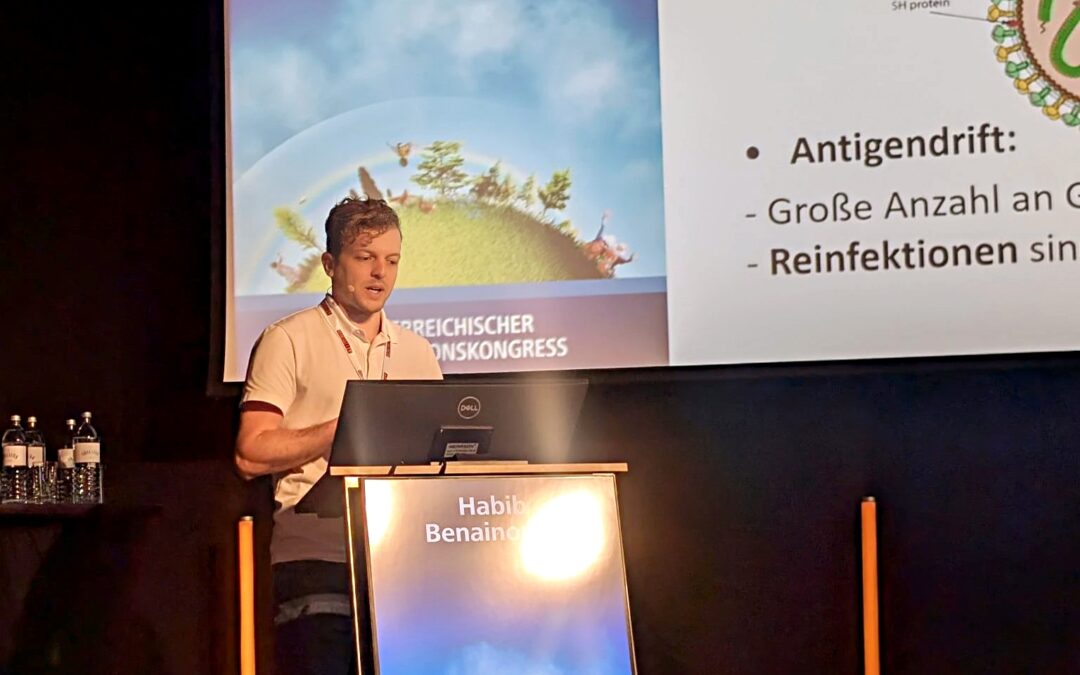
3rd Place Best Presentation Award for Habib Benainouna at the ÖIK 2025
Habib Benainouna received the 3rd Place Best Presentation Award at the 18th Österreichischer Infektionskongress (ÖIK) for his work on genomic surveillance of Respiratory Syncytial Virus in Tyrol.
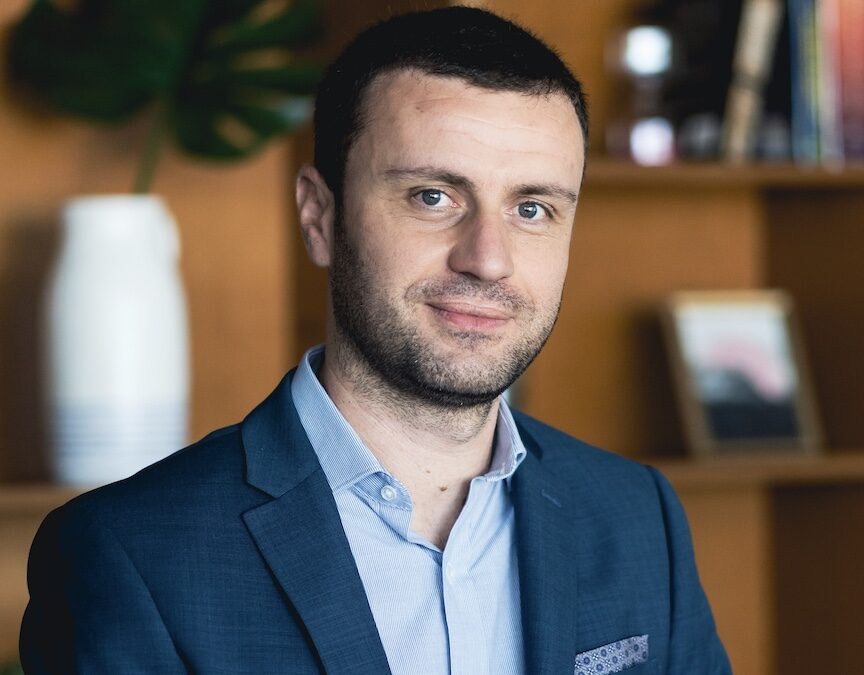
26.03.2026 | Guest Lecture: Dr. Aleksandar Antanasijevic
Dr Aleksandar Antanasijevic from the Institute of Virology and Structural Immunology at EPF Lausanne will give a lecture on molecular determinants of antibody immunodominance using cryo-EM on 26 March 2026 at 3 p.m. in the Pharmacology Lecture Hall.

Stefan Lung selected for Spotlight Talk at London Calling 2026
PhD student Stefan Lung (Stoiber lab) has been selected to present his research as a Spotlight speaker at London Calling 2026 in London — Oxford Nanopore’s flagship annual conference.
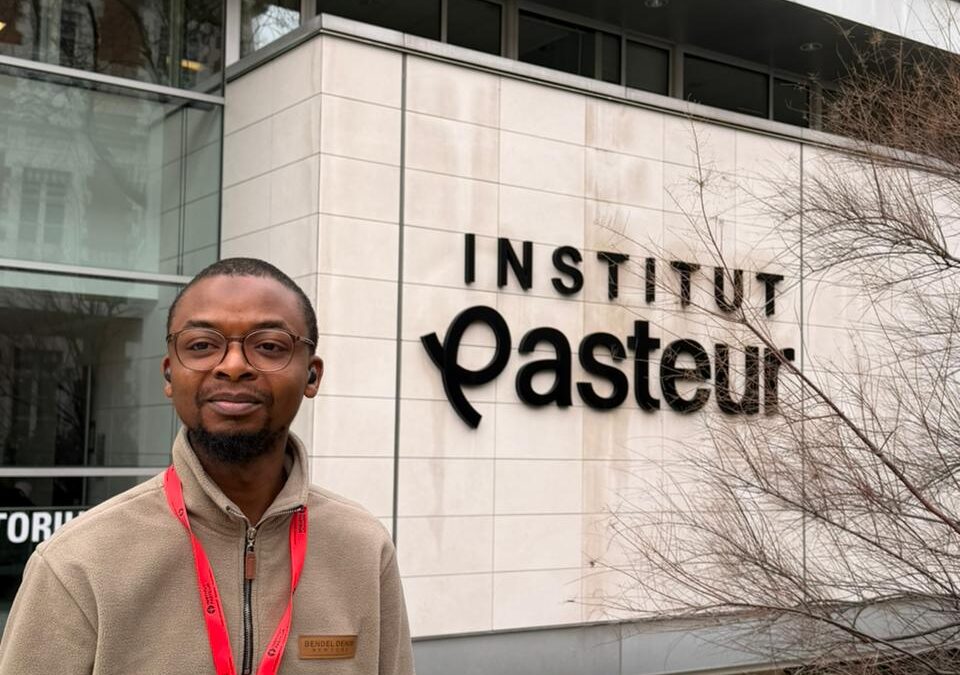
Tariq Agbabiaka receives fellowship for Institut Pasteur Vaccinology Course
PhD student Tariq Agbabiaka (Kimpel lab) has been awarded a fellowship to attend the prestigious Institut Pasteur Vaccinology Course in Paris.

January 2026
Respiratory virus trends in January 2026: Rhino-/enterovirus and influenza (H3N2) activity shows early signs of decline, while hospitalization rates remain above last year’s levels. SARS-CoV-2, RSV, and a range of additional respiratory pathogens continue to circulate.
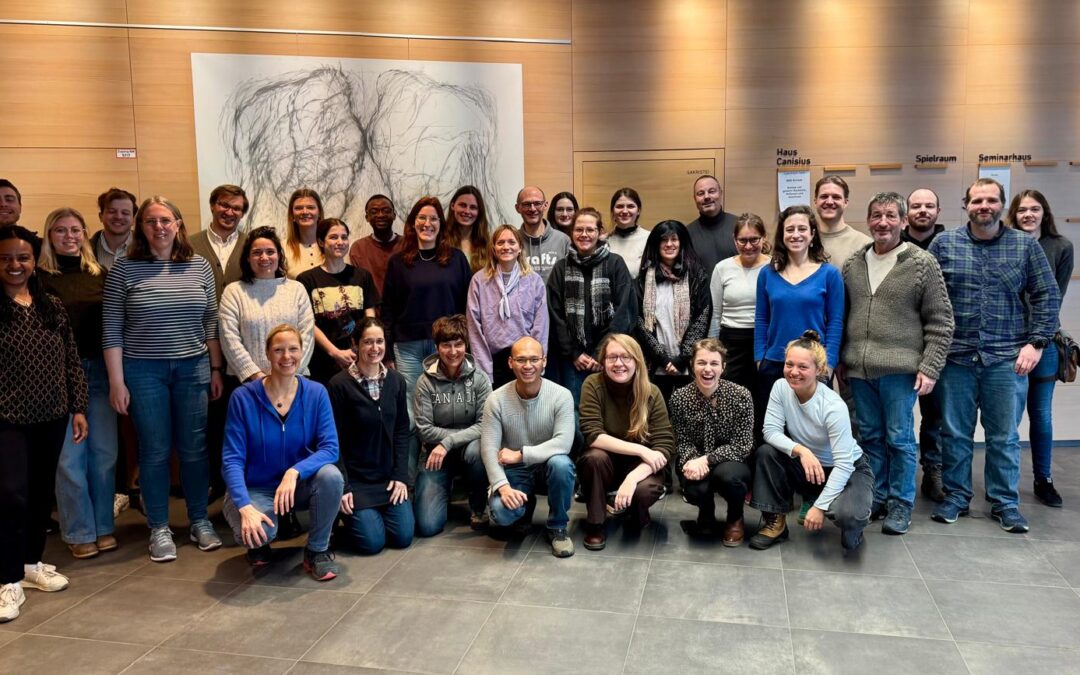
Annual Retreat 2026
The IVI held its annual retreat from January 7th to 9th. 20 talks and keynote lectures by Prof. Niklas Arnberg (Umeå University) and Daniela Weiskopf (La Jolla Institute) sparked lively discussions.

29.01.2026 | Guest Lecture: Dr. Mathias Schemmerer
Dr. Mathias Schemmerer from the Institute of Clinical Microbiology and Hygiene at the University Medical Center Regensburg will present on the work of the National Consultant Laboratory for Hepatitis A and Hepatitis E viruses on January 29, 2026 at 3:00 pm in the Pharmacology Lecture Hall.
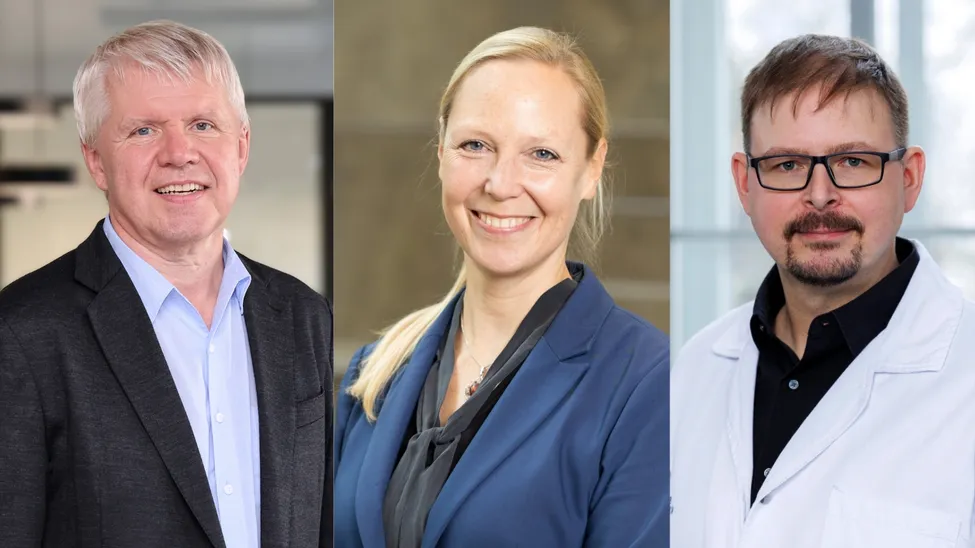
01.12.2025 | Panel Discussion: What We Can Learn from Virus Research for Tomorrow
Prof. Florian Krammer, Rector Gert Mayer, and Prof. Gisa Gerold discussed pandemic preparedness and pandemic retrospective on December 1, 2025. The free event at the Innsbruck City Library was well attended and featured a lively exchange with the audience. We thank all guests!
GfV Executive Board and Advisory Board meeting
IVI Director Gisa Gerold participated in the second joint board and advisory board meeting of the DACH Association Society for Virology (GfV) at Goethe University Frankfurt in her capacity as Chair of the Executive Board. Her cooperation with the Swedish Society for Virology was recognized and will continue with a focus on young scientist exchange.
November 2025
Increase in Hepatitis A cases in Austria: The Institute of Virology confirmed 11 infections by PCR in 2025 – significantly more than in previous years. These observations underscore the importance of preventive immunization against Hepatitis A.

13.11.2025 | Guest Lecture: Prof. Dr. Derek Smith
Prof. Dr. Derek Smith from Cambridge University will present on vaccine strain selection for antigenically variable pathogens on November 13th, 2025 at 3pm in the Pharmacology lecture hall.
H5N1 Avian Influenza: Current Developments
The current H5N1 situation in Austria requires attention. An expert article examines pandemic risk, transmission routes, and countermeasures.
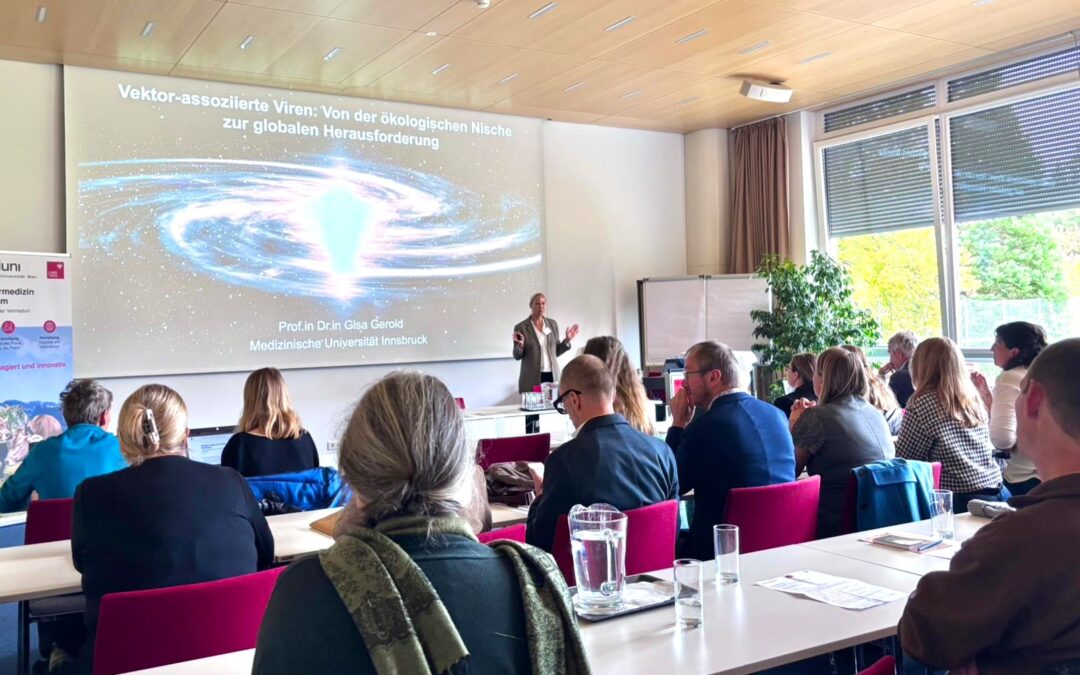
One Health Tyrol Symposium 2025
At the third “One Health Tirol” symposium in Innsbruck, Gisa Gerold presented on the growing threat of vector-borne viruses — focusing on Tick-Borne Encephalitis (TBE) and Chikungunya (CHIKV) and their current situation across Europe, Austria, and Tyrol.
October 2025
Rhinoviruses show clear dominance in October 2025 with a positivity rate of 45% among hospitalized patients. Particularly vulnerable are infants, young children, as well as elderly and immunosuppressed individuals. The Institute provides updated respiratory and gastro dashboards.

Company outing 2025
On this year's company outing on 30 September, our team took the Mutterer Alm cable car to the mountain station in the morning, where the group split up as the mood took them. Some opted for a relaxed and sociable hike to the Götzner Alm, while others took on the...
September 2025
RSV prevention update: Since December 2024, the monoclonal antibody Nirsevimab has been available in Austria’s free children’s vaccination program. The Institute of Virology is launching a pilot project for genetic surveillance of RSV variants in the upcoming season.

23.10.2025 | Guest Lecture: Prof.Dr. Judith Aberle
Prof. Dr. Judith Aberle from the Medical University of Vienna will present on tick-borne encephalitis on October 23rd 2025 at 3pm in the Pharmacology lecture hall.
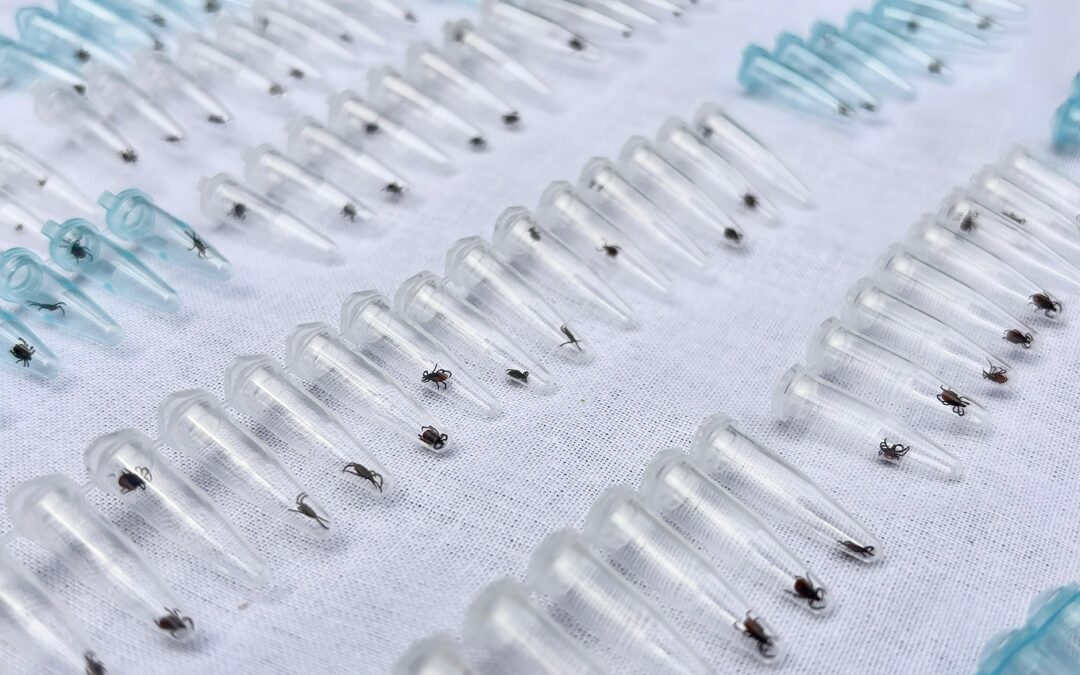
Tick and TBE project
It is currently tick peak season again! As new species and consequently new pathogens are now appearing in our country due to factors such as climate change and travelling, good early monitoring and appropriate preparation are essential! For this reason, the Institute...

07.08.2025 | Guest Lecture: Prof. Dr.med. Maximilian Lenz
Prof. Dr.med. Maximilian Lenz from the Institute of Neuroanatomy and Cell Biology at Hannover Medical School will present on VEEV-induced neuronal dysfunction on August 7th, 2025 at 10am in the Seminar room Virology, Schöpfstraße 41.
July 2025
The Institute of Virology provides information on Chikungunya fever: The Asian tiger mosquito continues to spread northward, increasing the risk of local infections in Central Europe. Learn more about symptoms, diagnostics, and the newly EU-approved vaccines.
June 2025
The Institute of Virology reports a significant increase in rotavirus infections in the first half of 2025. Notably unusual is the temporal shift: one-third of the total 106 positive cases occurred between May and mid-June, whereas the infections normally peak between February and April. Both young children and increasingly older adults have been affected.

24.06.2025 | Inaugural Lecture Gisa Gerold
Prof. Dr. Gisa Gerold, Director of the Institute of Virology, delivered her inaugural lecture “Viruses: the good, the bad and the unknown” on June 24th, 2025 at 4:30pm in the Audimax at Fritz-Pregl-Straße 3, Innsbruck.

18.05.2025 | Gordon Research Conference: Viruses and Cells
Prof. Gisa Gerold was elected Vice-Chair (2025-2027) and future Chair (2027-2029) of the Gordon Research Conference on Viruses and Cells at the 2025 conference held in May 2025.
May 2025
As spring temperatures rise, ticks become active again in Austria. AGES launched a nationwide tick monitoring program in 2024, which continues in 2025 and will be expanded to include additional pathogens. Learn how you can contribute to research by submitting ticks.

12.06.2025 | Guest Lecture: Prof. Dr. Isabella Eckerle, PhD
Prof. Dr. Isabella Eckerle from the University of Geneva will present on emerging viruses online via Webex on June 12th, 2025 at 3pm.
April 2025
The Institute of Virology reports a significant rise in Mycoplasma pneumoniae infections in Tyrol. Learn more about PCR diagnostics, increasing antibiotic resistance, and our respiratory PCR panel.

11.06.2025 | Wissen|schafft Gesundheit
Prof. Dr. Gisa Gerold will present “Cell pirates in the body: Why it is important to understand viruses” in the Wissen|Schafft Gesundheit lecture series on June 11th, 2025 at 6:30pm in the Large Lecture Hall, Fritz-Pregl-Straße 3, Innsbruck.